tuition

Obama's "Fighting for Scraps: Higher Ed Edition!" (Updated)

Obama and Arne DuncanAs anyone with an eye on the world of electoral politics has seen, because this is an election year we've been seeing "Candidate Obama" much more often. The Candidate Obama stage is about the only time the Democrats' liberal base gets a few bones thrown to it (it's a shame he wasn't up for re-election in 2010 - we might have gotten a halfway decent healthcare bill). 

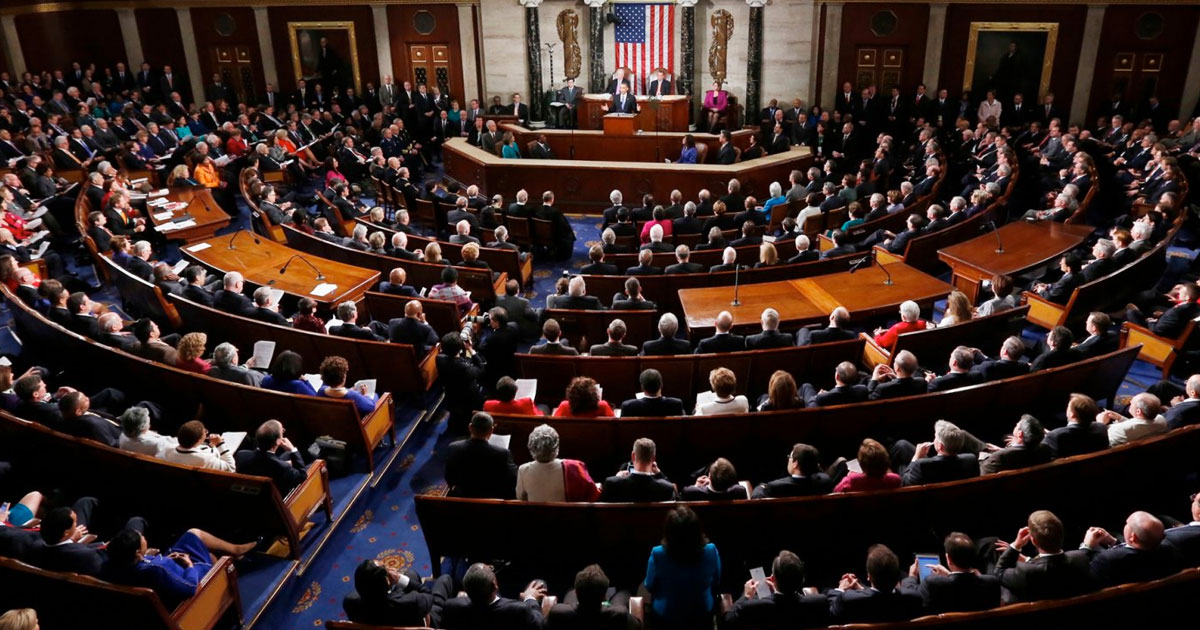
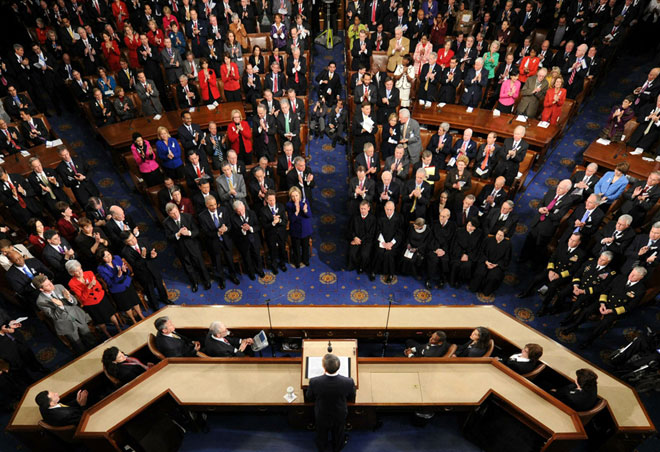
In a bid to re-energize the university student vote, President Obama made quite a few pledges and proposals around higher ed in his State of the Union Address. The crux

Join me in a national commitment to train two million Americans with skills that will lead directly to a job. My Administration has already lined up more companies that want to help. Model partnerships between businesses like Siemens and community colleges in places like Charlotte, Orlando, and Louisville are up and running. Now you need to give more community colleges the resources they need to become community career centers – places that teach people skills that local businesses are looking for right now, from data management to high-tech manufacturing. [...]

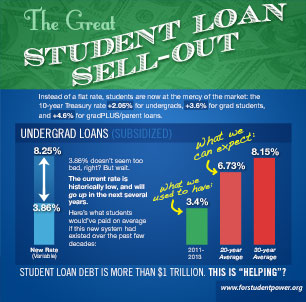
When kids do graduate, the most daunting challenge can be the cost of college. At a time when Americans owe more in tuition debt than credit card debt, this Congress needs to stop the interest rates on student loans from doubling in July. Extend the tuition tax credit we started that saves middle-class families thousands of dollars. And give more young people the chance to earn their way through college by doubling the number of work-study jobs in the next five years.

Of course, it's not enough for us to increase student aid. We can't just keep subsidizing skyrocketing tuition; we'll run out of money. States also need to do their part, by making higher education a higher priority in their budgets. And colleges and universities have to do their part by working to keep costs down. Recently, I spoke with a group of college presidents who've done just that. Some schools re-design courses to help students finish more quickly. Some use better technology. The point is, it's possible. So let me put colleges and universities on notice: If you can't stop tuition from going up, the funding you get from taxpayers will go down. Higher education can't be a luxury – it's an economic imperative that every family in America should be able to afford.

A few thoughts.

LSE is Occupied! An Interview

2010 LSE Occupation

On December 2nd, students at the London School of Economics and Political Science occupied the Old Building on campus, demanding the Administration take a stand against the looming education cuts coming from Parliament. I chatted with occupying LSE students Isla Woodcock ('11), Emma Kelly ('12), and Alice Stott ('13).

FSP: So first off, what's the overall mood in the building right now? What are folks doing?

LSE: Very positive. The events team are drawing up a schedule for the week, others are drafting our statement.We're all ecstatic about getting official union backing this afternoon after a vote!

FSP: Yes, I read that! How much organizing for the occupation itself was done under the auspices of the student union? Or was it more of an independent grouping of student activists?

Washington Monthly and Alternet Applauding the Walmart-ization of Higher Ed?

Education Sector and the Wal-mart-ization of Higher Ed

The Washington Monthly (reposted by Alternet????) has a lengthy, horrendous article about the future of higher education, alternating between being a fluff piece for a cheap online course company (StraighterLine) and being an apocalypse piece on the supposed doom of most colleges and universities. It's a long essay, but it's an important read - if only to get a sense of what the beltway non-profit establishment thinks about higher ed.

It's hilariously chock-full of baseless economistic assumptions, profound misunderstandings of universities, and attacks on professors. Let's see:

And while she had a professor, he wasn’t doing much teaching. “He just stands there,” Solvig’s daughter said, while students worked through modules on their own.

- Trashing all of introductory course teaching through use of a single anecdote? Check.

Given the choice between paying many thousands of dollars to a traditional university for the lecture and paying a few hundred to a company like StraighterLine for a service that is more convenient and responsive to their needs, a lot of students are likely to opt for the latter—and the university will have thousands of dollars less to pay for libraries, basketball teams, classical Chinese poetry experts, and everything else.

- Implying that the high cost of higher ed has more to do with "classical Chinese poetry experts" than the explosion of exorbitantly-paid administrators and consultants, or the shrinking share of state financial support? Check. (See Marc Bousquet's work for the real reason for the tuition explosion.)

One of StraighterLine’s original partner colleges was Fort Hays State University, just off I-70 in Hays, Kansas.[...] By early 2009 a Facebook group called “FHSU students against Straighter Line” had sprung up, attracting more than 150 members. [...] The English Department announced its displeasure while a well-known academics’ blog warned of the encroaching “media-software–publishing–E-learning-complex.” Gould was denounced in the Fort Hays student newspaper.
[...]
When I spoke with Smith again in June, the whole experience had left him frustrated. “A couple of posts from grad students who’ve never even seen or taken one of the courses pop up on Facebook,” he said, “and North Central [the accreditor] launches an investigation. Meanwhile, there are horror stories about bad teaching at regular universities on RateMyProfessors.com”—a popular student feedback site—“and they don’t give it a second look.”

- Casting students and professors who are concerned about their job security and academic freedom as backward-thinkers bullying a poor, unfortunate venture capitalist? Check.

Smith could offer introductory college courses à la carte, at a price that seemed to be missing a digit or two, or three: $99 per month, by subscription. Economics tells us that prices fall to marginal cost in the long run. [...] Which means the day is coming—sooner than many people think—when a great deal of money is going to abruptly melt out of the higher education system, just as it has in scores of other industries that traffic in information that is now far cheaper and more easily accessible than it has ever been before. [...] There is an unstable, treacherous future ahead for institutions that have been comfortable for a long time. Like it or not, that’s the higher education world to come.

- Using groundless economic assumptions to proclaim the inevitable triumph of for-profit edu-farms over universities? Check.

While the article ends on a wistful note about the social good of having the liberal arts university, it's by way of backhanded praise of "quirky small university presses" and "Mughal textile historians," implying that there's a division between Very Serious Studies™ (like business, economics, hard sciences, and trade school subjects) and useless-but-quaint studies (everything else).

Follow the Money

It's important to see exactly from whence the author, Kevin Carey, is coming. Carey is the policy director at Education Sector, an inside-the-beltway think tank. Check out where it gets its money: free-marketeers like The Gates Foundation, CityBridge Foundation, KnowledgeWorks Foundation, and the Rodel Foundation. Education Sector pushes hard for charter schools, rigid performance testing of teachers (with an extra middle finger to teacher unions usually tacked on), standardized testing of students, and the implementation of other market-oriented "reforms" in both K-12 and higher education.

A Better Alternative?

Education Sector isn't the only, and certainly not the first, to endorse the Walmart-ization of higher ed. Back in April we covered Brigham Young professor David Wiley, who is pushing very similar "reform" Kool-Aid.

The funny thing is that it's the introduction of corporate models and thinking into the university that's fueled both the spiraling tuition cost and the perma-temping of faculty (which can result in lackluster 101 courses). Coincidentally enough, that's the same culprit when it comes to newspapers going under, which Carey uses for comparison.

The solution offered by StraighterLine and its ilk seems to be "look at these caricatured subpar offerings of universities: we can give you the same crappy quality, but cheaper!" The actual solution isn't to package online quizzes as "curriculum," but to democratize the university - put it back in the hands of students and faculty. The few truly idiotic expenditures that Carey correctly points out ("vainglorious building projects, money-sucking sports programs") would likely never happen if those at the reins of the university were its actual constituents, instead of being run and overseen by the very class of Wall Street denizens from which Carey eagerly awaits salvation.

Update: I forgot to mention this delightful tidbit:

Ivy League and other elite institutions will be relatively unaffected, because they’re selling a product that’s always scarce and never cheap: prestige. Small liberal arts colleges will also endure, because the traditional model—teachers and students learning together in a four-year idyll—is still the best, and some people will always be willing and able to pay for it.

That's right! The rich kids will get to keep their decent educations - reallycheapdiplomas.com will more than suffice for working class kids, right?

NYU - The LATEST - 1:31AM

The tension inside the occupied NYU building has spilled out onto the streets in the form of literal street combat - cops have rolled in en masse at around 1:15AM (the deadline NYU Admin set for everyone to leave was 1AM). It's now 1:30AM, so far there's only been one arrest (of a student trying to climb a streetsign) - but apparently there's been copious amounts of teargas used. The street and intersection are so full of people, the cop cars can't get anywhere close.

NYU Administration refuses to negotiate, threatens expulsion

This is Jasper Conner's first post on For Student Power - thanks for writing, Jasper! - Patrick 

NYU Refuses to Negotiate with Student Occupation!
SUPPORT NYU OCCUPATION!


NYU’s administration refuses any face-to-face contact with student occupation, drawing out Take Back NYU!’s occupation, currently making national news.


The occupation, which began at 10pm on Feb. 18th with the seizure of the 3rd floor of the Kimmel Center has made news across the country and received declarations of support from universities across the world.

NYU’s Administration refuses to allow the students of the occupation a place at negotiations, instead relying on threats and intransigence to try to end Take Back NYU!’s campaign.

The NYU administration has threatened students with arrest late tonight, they need your support NOW! Click the link below and after you call and e-mail the administration, send the link to your friends!

SUPPORT NYU OCCUPATION!
You can also sign the online petition!

 Below is a recent press release from Take Back NYU! detailing the administration’s refusal to negotiate and their intention to maintain the Occupation.

35 More Students Join NYU Occupation Despite Police Violence - Midnight RALLY planned!

The Occupation of NYU for a more affordable, democratic, and socially responsible university has been going on for nearly 24 hours.

The administration of NYU still refuses to negotiate with the students of Take Back NYU! and has made multiple threats to students, including calling parents to threaten expulsion and promising arrests at 1 am in the morning.

I just got word from Drew SDSer Christa H. that about 35 students just rushed inside to join the Occupation. According to Christa, the police assaulted students Occupying the Kimmel Center and those making their way inside. She said that they hit many students and ripped shirts off of others. She ended the conversation by saying she had to go help others block the doors. According to Alex Lotorto, a member of Muhlenberg SDS, there are nearly 75 students inside the occupation at the moment!

Students have been making their way to NYU from across the city and from as far away as DC to support the amazing work that Take Back NYU! has done in the two years of their campaign leading up to this occupation. Support is still needed, anyone who can make it to NYU should head their immediately as support from the street is greatly needed.

Take Back NYU! is planning to hold a midnight Rally, which will take place right before the administration promised to give the order to arrest.

If you’re not close enough to travel you can still support the cause by letting everyone know about this bold action that NYU students are taking and by calling the NYU administration to demand that they NEGOTIATE with students rather than THREATEN AND BEAT them.

Support Take Back NYU!

Sign the Petition

cross-posted at Building Our Power

"We're not giving them shit!" NYU Negotiations are STARTING

NYU Administration has agreed to begin negotiations with the occupying students. They originally wanted some kind of concession from the students in exchange for negotiations. In the words of Farah, who was at the megaphone, "We're not giving them shit! We are strong and we are united!"

If that's what negotiations have in store, then the students should be in for a productive night.

CLICK HERE for a live streaming video from the occupation.

NYU Occupation!

http://www.takebacknyu.com

****FOR IMMEDIATE RELEASE******

NYU BUILDING TAKEOVER!!!

At approximately 10pm tonight (Feb. 18), students of Take Back NYU! took over the Kimmel Marketplace. They have blockaded the doors and declared an occupation! They presented their demands to the NYU administration. They read as follows:

DEMANDS

Big Surprise: Athletic Departments are Bleeding Universities Dry

Athletic budgets are strangling University financesThere's a great op-ed from the Chronicle of Higher Education I just got forwarded. It lays out the case that many athletic departments (especially those in Division I), when their financial books are opened to the sunlight, are draining immense amounts of money from their parent institutions. Money that could be used to fund scholarships, loan repayment programs, and upgrade academic facilities.

Students Fight Tuition Hike - And Win

students protest tuition at Concord UniversityStudents at Concord University last month protested a proposed 6% hike in tuition. The University's Board of Governors was meeting on campus, and students made their opposition known. The Charleston Gazette:

Concord University students played Darth Vader's theme song as members of the university's board of governors walked through a crowd of 300 student-protesters last Tuesday.

Wearing red T-shirts and holding signs stating, "If we can't pay, we won't stay" and "Higher education, not higher tuition," the students' message to board members was clear: a proposed 6 percent tuition and fees increase was unacceptable.

By day's end, they thought they had at least partially accomplished their mission.

The board reduced the proposed increase to 3.7 percent.

"We were told this year's increase would be as close to zero as possible," said Brian Henderson, business manager for Concord's student government. But the administration then came back with a 6 percent increase, he said.

"We've had the highest freshman requirement last year, but that was slashed by those that we lost because of tuition hikes," Henderson said.

Last year's tuition and fee increase of 5 percent brought in $1 million to the university, Henderson said. But the university lost $1.5 million from the students who dropped out, he said.

"It's a vicious cycle," he said. "Less and less students are paying more and more for the same product."

Between 1997 and 2007, tuition and fees at Concord have risen 91 percent, according to a report by the state Higher Education Policy Commission.

If students organize, they can win. Even though the school was screaming that it was "out of their hands" because the state didn't give them enough money, students were able to wring a significant concession.

But this does show that especially in state schools, just organizing one campus isn't going to cut it. Students should be organizing their campuses in such a way that gets a large portion of the student body engaged and energised, and then link up with other schools in the state system. Because the ultimate goal is free education for all - and that requires bringing student power to bear on the halls of the state (and eventually, Federal) capitol.

We can look to our brothers and sisters up north for guidance and inspiration. Students are organized into student unions in Canada, and especially in Québec they take radical action to protect student rights and interests.

Unionizing and connecting students across state system campuses would allow things like strikes and protests to exert power in a way that forces legislators to deal with the problem.

(Entire Charleston Gazette article under the fold)

Syndicate content